
Modern aquaculture can be divided into two main production models: land-based systems and sea/lake-based systems. Each approach has distinct advantages, challenges and environmental considerations. The choice depends on species, location, regulations, water availability, logistics and investment strategy.
Land-based aquaculture
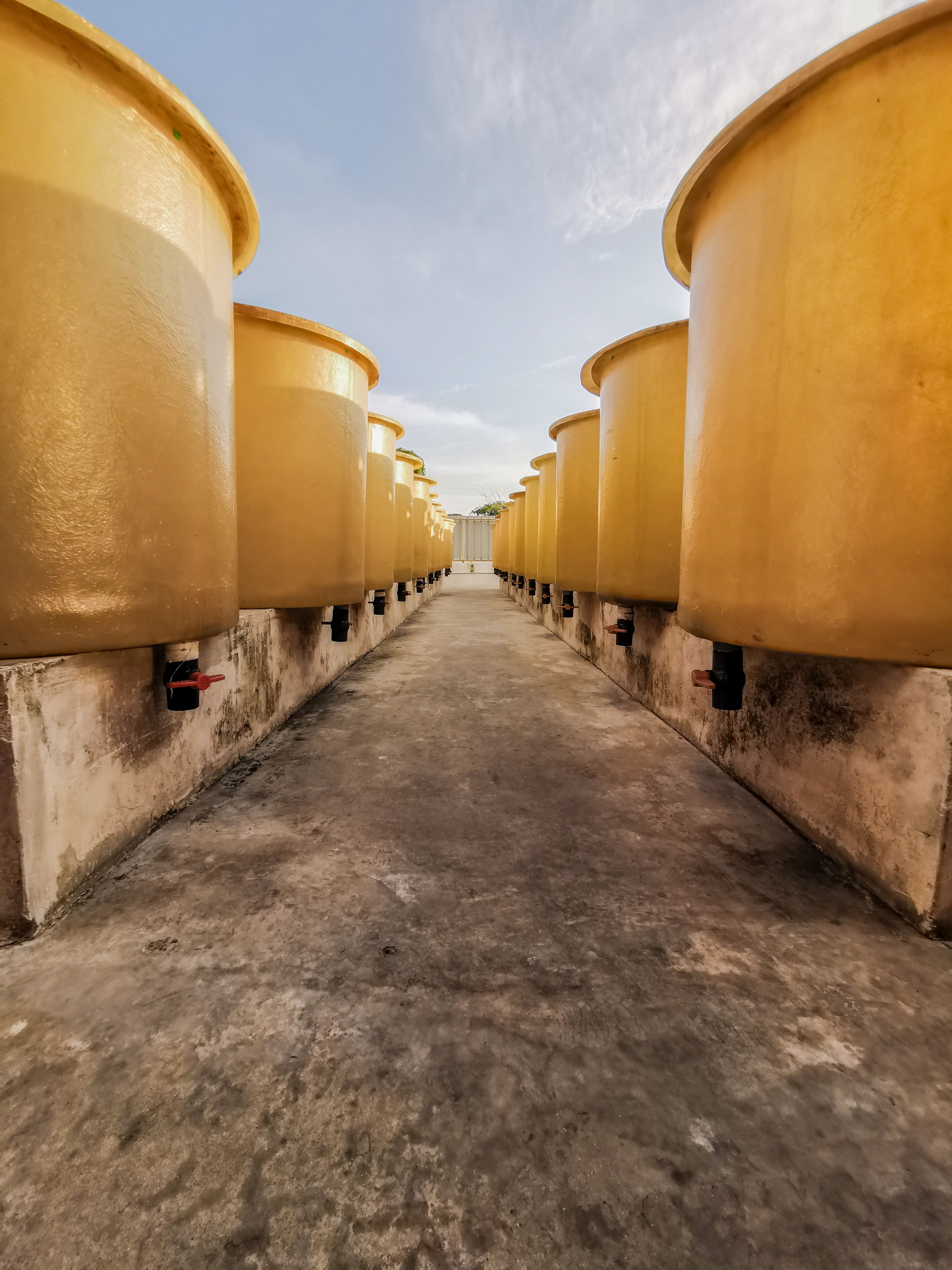
Land-based facilities raise fish in tanks located indoors or outdoors on land. Most modern facilities use Recirculating Aquaculture Systems (RAS), where water is continuously filtered, treated and reused.

- High control of temperature, oxygen, water quality and production conditions.
- Excellent biosecurity with reduced exposure to parasites and external disease vectors.
- Year-round production independent of storms, seasonal changes and ocean conditions.
- Can be located close to consumers, reducing transport costs and carbon footprint.
- Nutrient-rich sludge can be collected and treated or reused.
- Advanced monitoring, automation and AI systems can optimise operations.
- Requires higher initial investment (CAPEX).
- Energy demand is significantly higher than traditional open-water farming.
- Technical failures can have rapid consequences if redundancy is inadequate.
Typical species include Atlantic salmon, rainbow trout, Arctic char, sturgeon, shrimp, eel and various hatchery-produced marine species.
Sea and lake-based aquaculture (net pens)
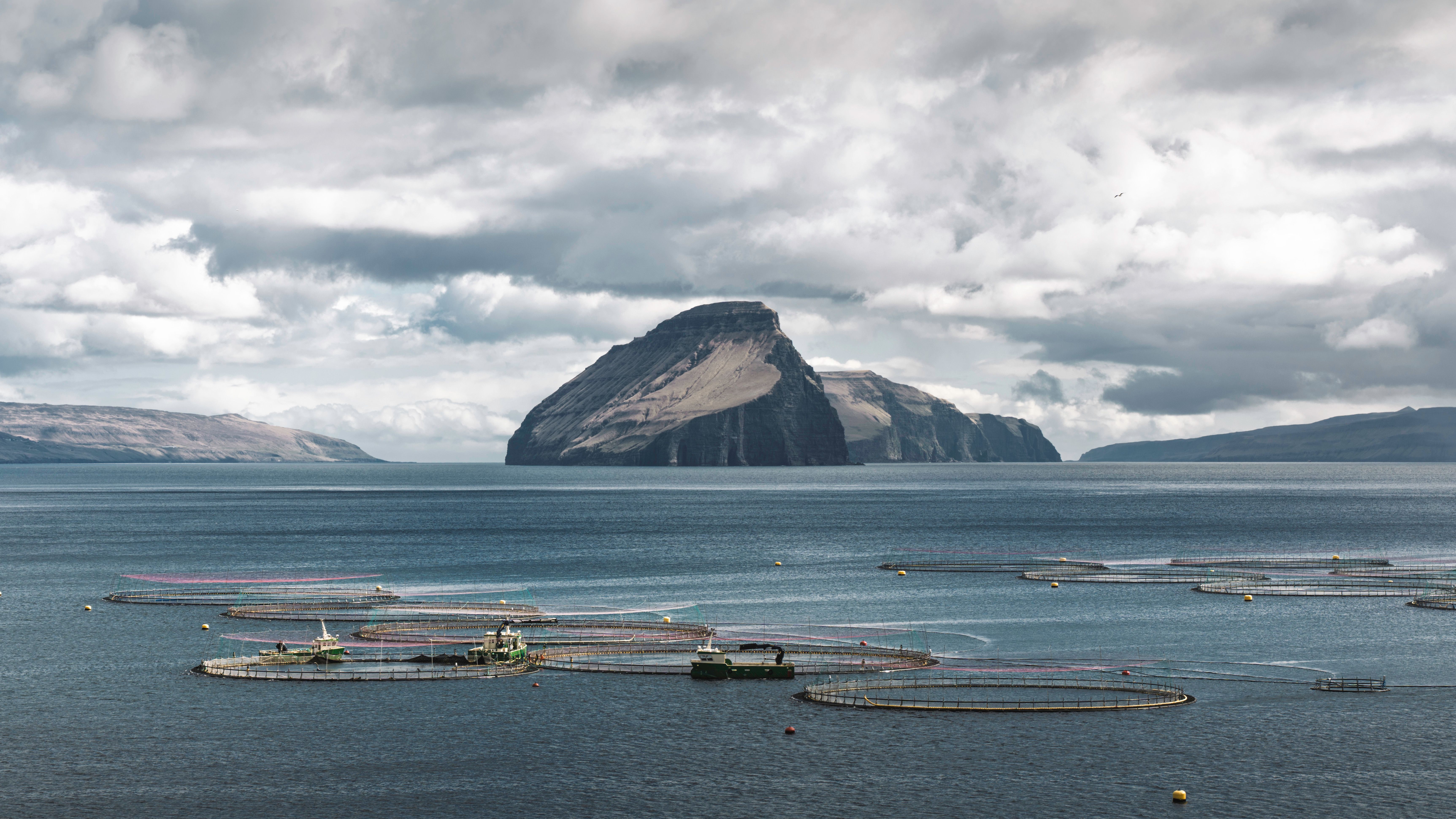
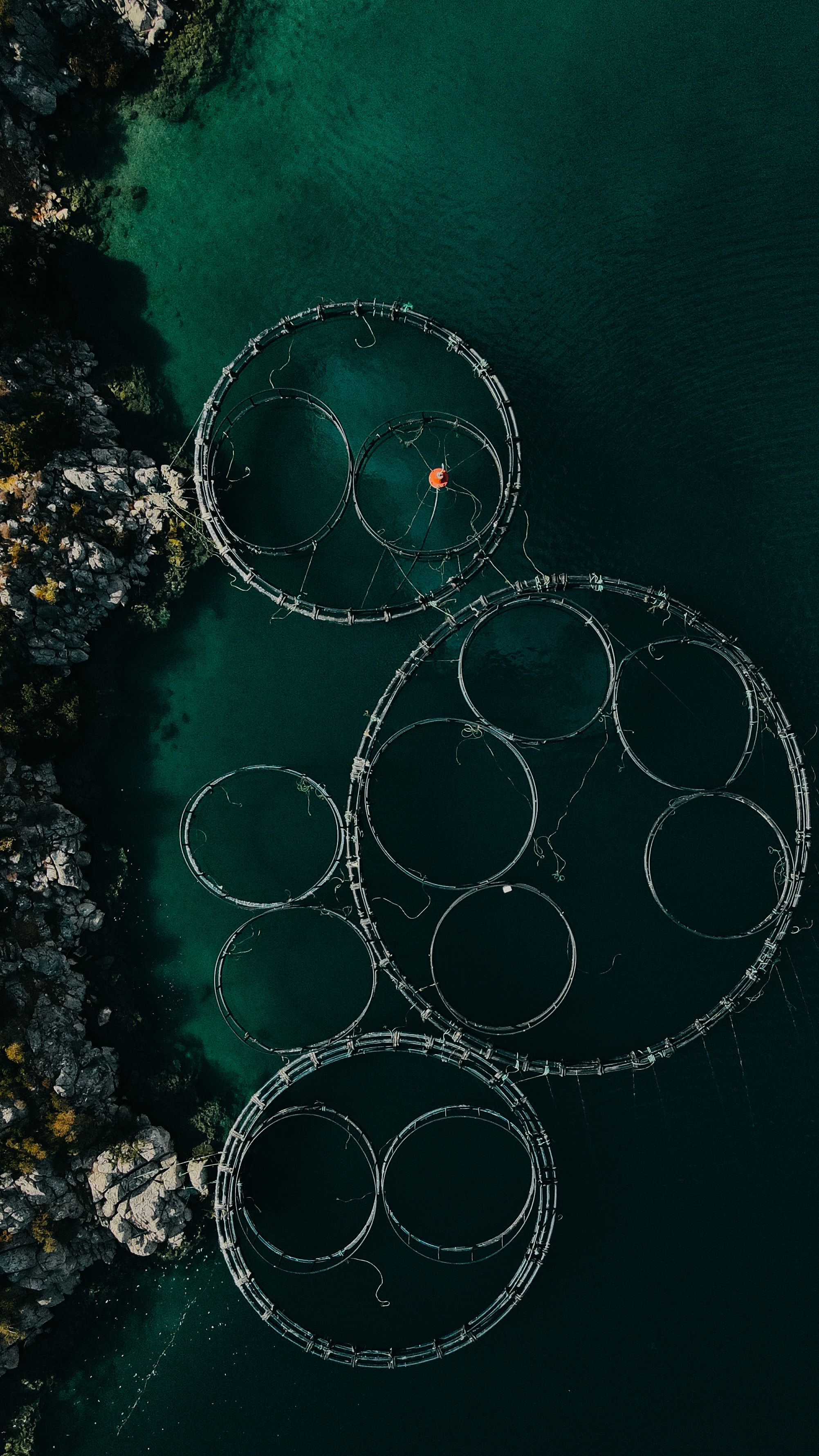
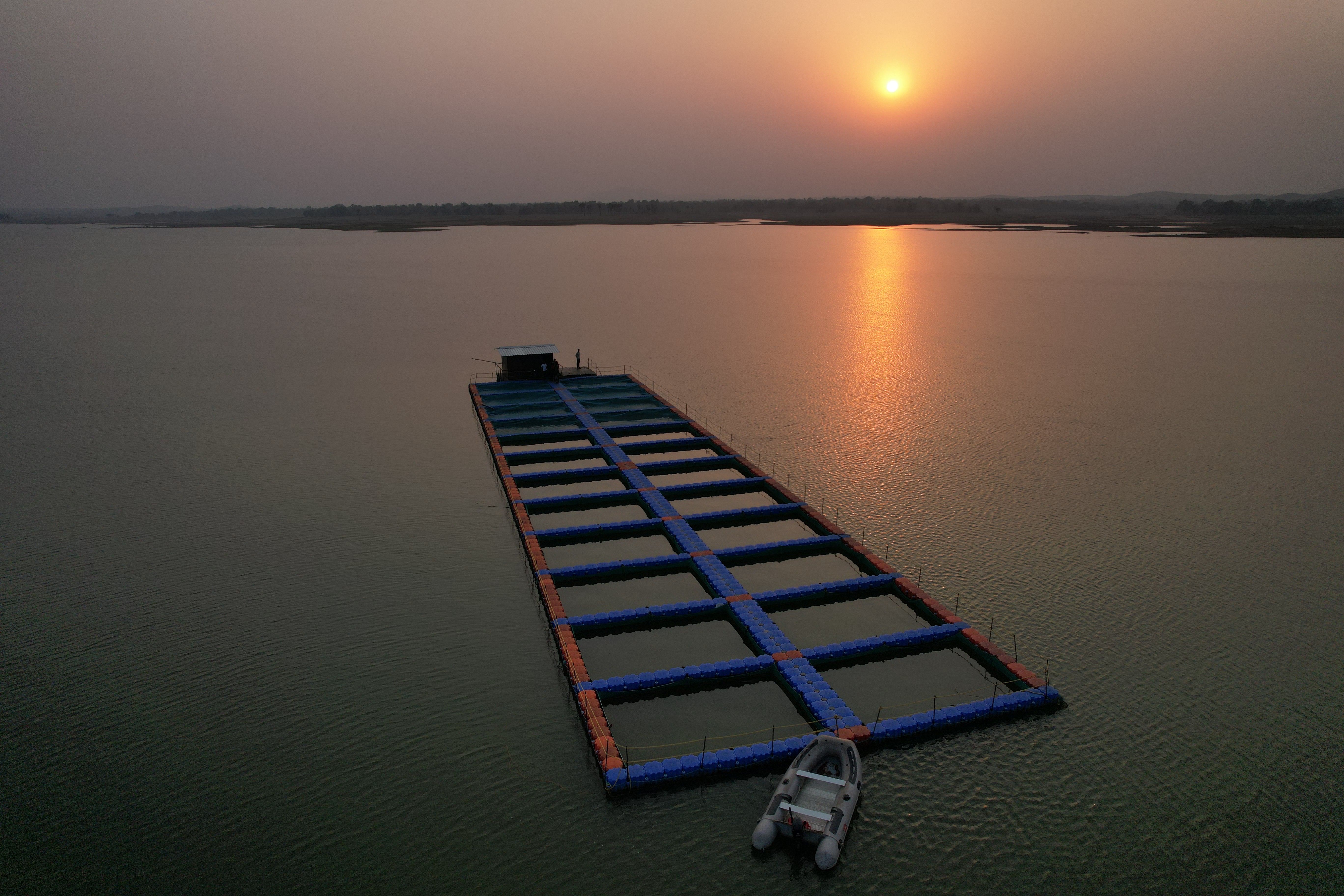
Net-pen farming uses cages installed in oceans, fjords, bays or freshwater lakes. Fish grow in natural water bodies while operators provide feed, monitoring and husbandry.
- Lower CAPEX per tonne of fish produced.
- Large natural water volumes provide dilution and temperature buffering.
- Generally lower energy consumption than intensive land-based facilities.
- Well-established technology with decades of commercial experience.
- Exposure to parasites, pathogens, predators and harmful algal blooms.
- Risk of fish escapes and interaction with wild populations.
- Environmental concerns related to waste discharge and ecosystem impacts.
- Production affected by weather, storms and changing environmental conditions.
- Permits, stakeholder acceptance and social licence are often critical.
Net-pen systems are widely used for salmon, trout, sea bass, sea bream and many other marine species.
Pond culture (land/freshwater)

Earthen and lined ponds are a third, very widespread form - often on land but at lower technical intensity than RAS. They dominate volume in parts of Asia, Africa and Latin America, while Europe and North America more often use raceways, net pens and land-based systems.
Key comparison
- Biosecurity: land-based systems generally provide higher disease control.
- Environmental control: RAS facilities offer much greater control over water quality and production conditions.
- Investment cost: sea-based systems usually require lower upfront capital investment.
- Operating cost: land-based systems typically have higher energy and technical operating costs.
- Environmental management: land-based farms can capture and treat solids and nutrient streams more effectively.
- Scalability: sea-based farms can often scale production more easily when permits are available.
- Market proximity: land-based facilities can be located near consumers and processing facilities.
Industry trend
Land-based RAS facilities are expanding rapidly in regions where environmental regulations, biosecurity requirements, freshwater scarcity or market proximity favour controlled production. However, sea-based net-pen farming still accounts for the majority of global salmon production due to its lower production cost and large-scale operational maturity. Hybrid and semi-flow-through solutions (e.g. land-based start with strong treatment) often bridge the two models. See also the RAS section and our DABCE FlowFarm model for concept sizing.