What is OWTS™?
Reliable Drinking Water. Anywhere.
OWTS™ (Off-Grid Water Treatment System) is a modular water treatment platform designed to produce safe drinking water from natural freshwater sources such as rivers, lakes, streams and wells. The system combines biological filtration with DABCE’s proprietary treatment technologies to deliver reliable drinking water production while maintaining low energy consumption and simple operation.
Unlike many conventional water treatment systems, OWTS™ is designed around proven low-complexity treatment principles. The platform operates without membranes, requires no routine chemical dosing, and can be powered by batteries, solar panels, wind turbines, vehicles or conventional grid power.
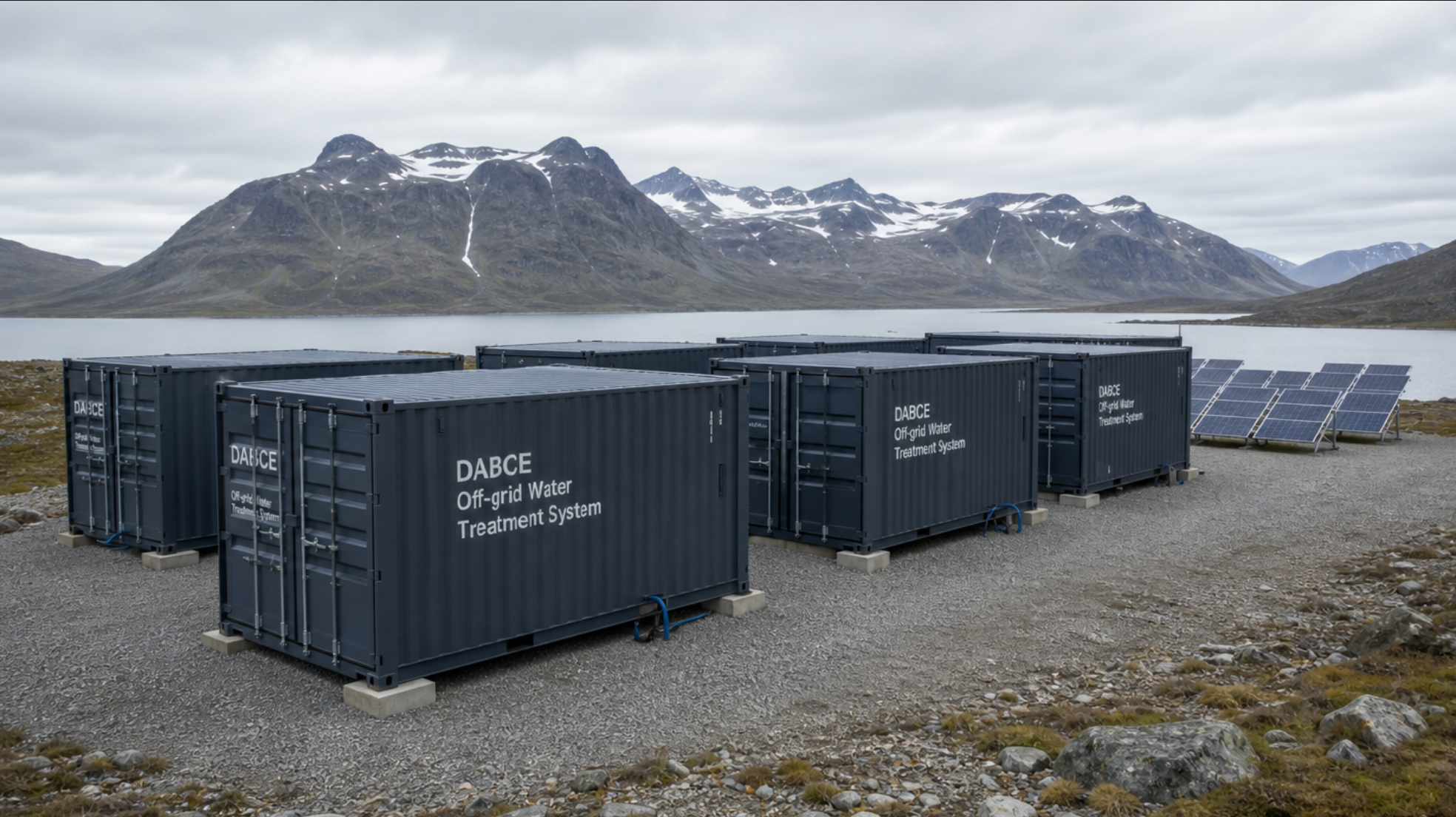
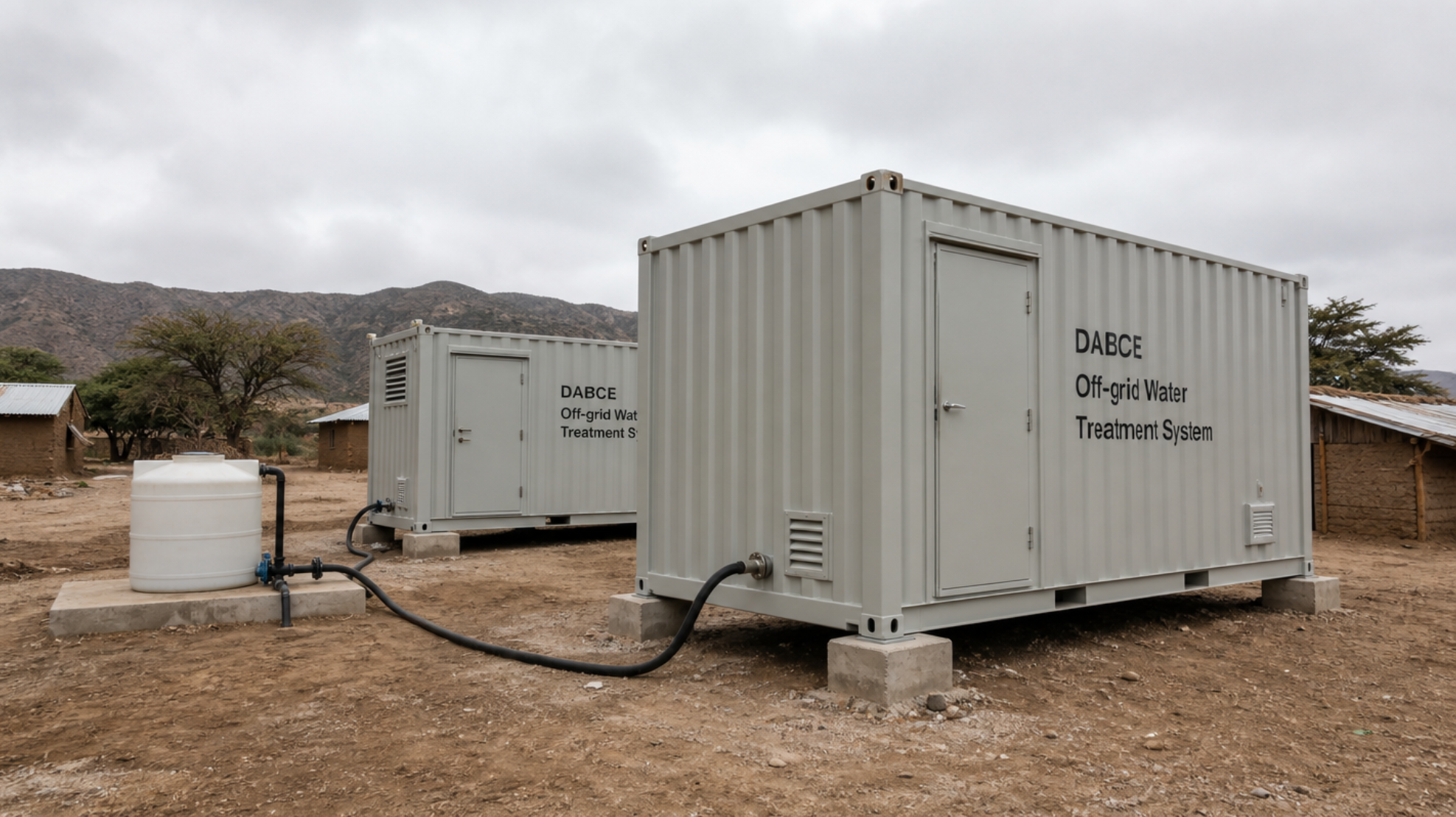
The OWTS™ family ranges from compact portable units for households and field operations to containerised systems capable of supplying communities, emergency response operations, industrial sites and remote infrastructure projects with safe drinking water.
Designed for Challenging Environments
OWTS™ has been developed for locations where water infrastructure is unavailable, unreliable or difficult to deploy. The modular design enables rapid deployment, straightforward maintenance and operation by non-specialist personnel. The system is built around robustness, energy efficiency and ease of use rather than complex automation and consumable-intensive treatment technologies.
Typical Applications
- Remote communities
- Rural properties and farms
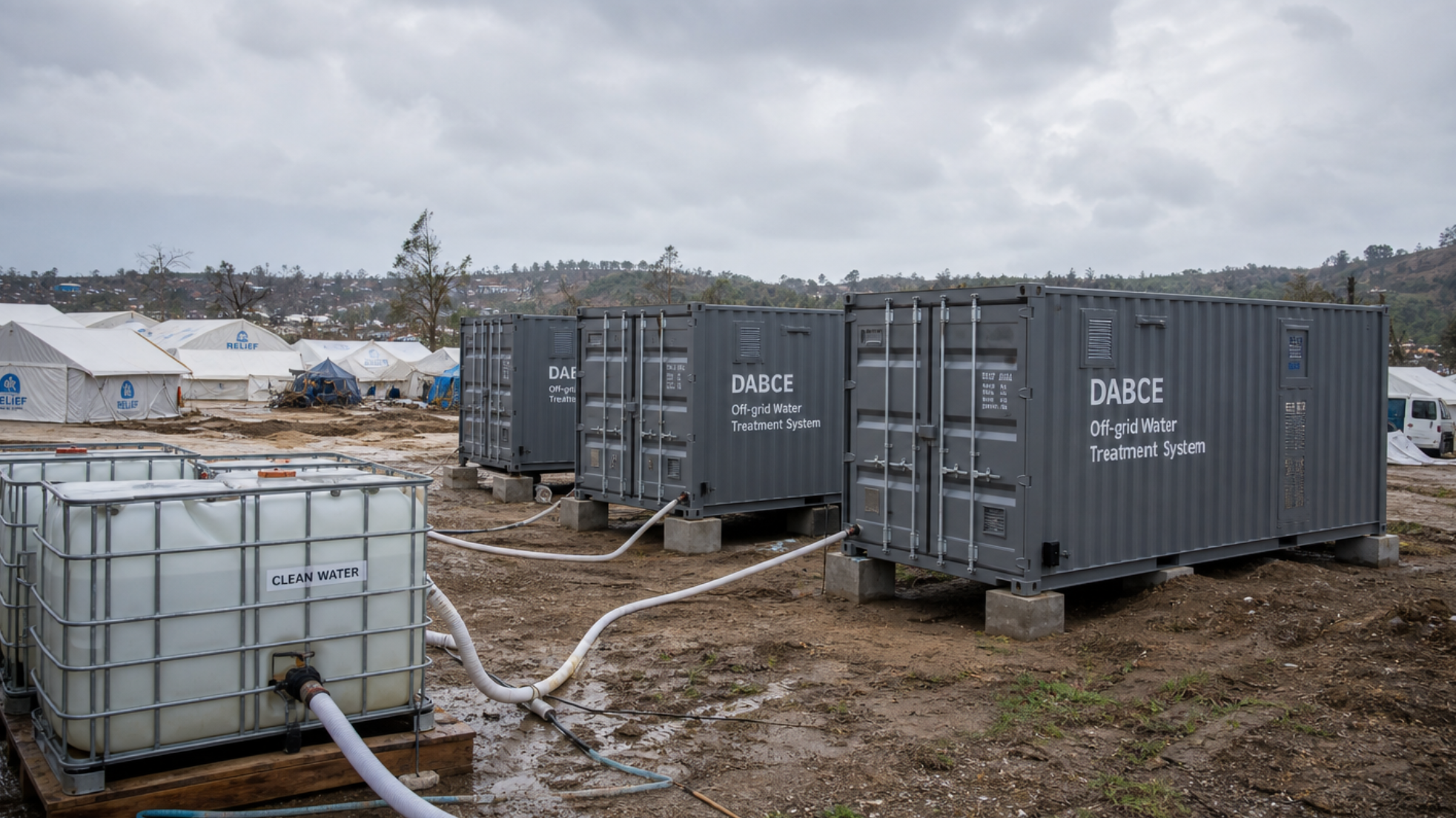
- Emergency response and disaster relief
- Defence and civil protection
- Mining and construction projects
- Research stations and expeditionary camps
- Temporary workforce accommodation
- Decentralised drinking water supply systems
How OWTS™ Works
OWTS™ uses a multi-barrier treatment approach that combines proven filtration technologies with DABCE’s proprietary water sterilisation and treatment systems to produce safe drinking water from natural water sources. The process is designed for reliable operation in remote environments while maintaining low energy consumption and minimal operator requirements.
Step 1: Intake & Pre-Filtration
Raw water is collected from lakes, rivers, streams, wells, or other freshwater sources. Integrated pre-filtration removes coarse particles and debris before the main treatment stages.
Step 2: Biological Filtration
The water passes through a biological filtration stage where suspended solids, microorganisms and organic contaminants are reduced through a proven low-energy treatment process. This technology has been used in drinking water production worldwide for more than a century and remains one of the most robust treatment methods available.
Step 3: DABCE Advanced Sterilisation & Treatment™
Following filtration, water enters the DABCE Advanced Sterilisation & Treatment™ stage. This proprietary process provides an additional protection barrier and helps ensure consistent drinking water quality under varying operating conditions. The treatment philosophy is based on multiple barriers and repeated treatment exposure rather than reliance on a single process step.
Step 4: Final Polishing
A final polishing stage removes remaining fine particulate matter before distribution, providing an additional layer of security and water quality assurance.
Technical Specifications
The OWTS™ platform is available in portable, benchtop and containerised configurations, allowing deployment from individual households and field teams to communities, critical infrastructure projects and emergency response operations.
Benchtop OWTS™
Compact drinking water treatment system intended for laboratories, demonstrations, testing, education and small-scale water production.
| Parameter | Specification |
|---|---|
| Capacity | 20 L/h |
| Clean Water Storage | 100 L |
| Water Source | Lakes, rivers, streams and wells |
| Treatment Technology | Biological Filtration + DABCE Advanced Sterilisation & Treatment™ |
| Power Supply | 12V DC / 24V DC / 230V AC |
| Typical Applications | Laboratory, education, pilot projects and households |
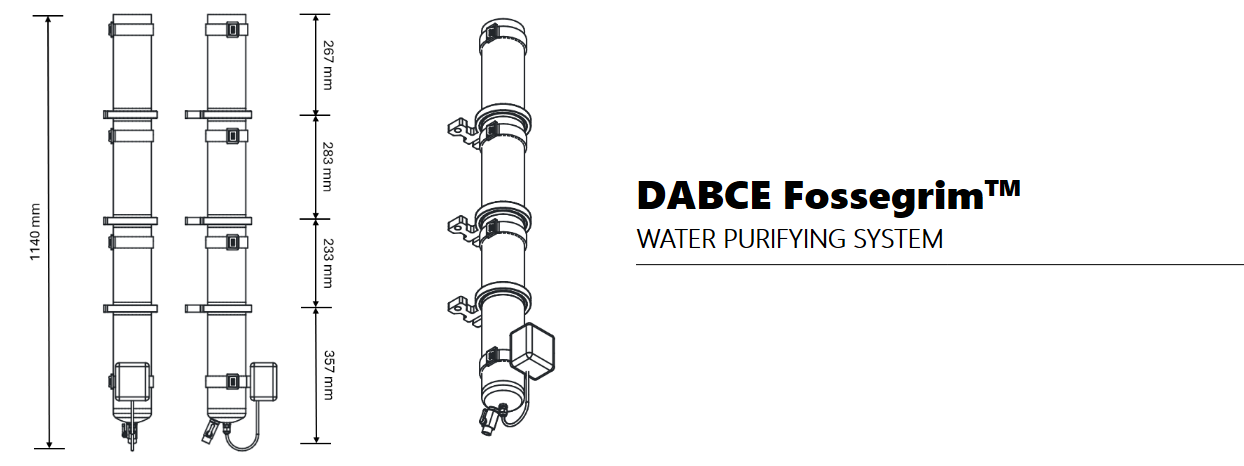
Fossegrim™ Carrying Unit
Ultra-portable drinking water treatment unit designed for field deployment where simplicity, portability and independence from infrastructure are critical.
| Parameter | Specification |
|---|---|
| Capacity | 20 L/h |
| Internal Diameter | 90 mm |
| Flow Principle | Gravity-Driven |
| Treatment Technology | Biological Filtration + DABCE Advanced Sterilisation & Treatment™ |
| Portability | Hand-Carried |
| Typical Applications | Emergency Response, Field Operations, Expeditions and Remote Communities |
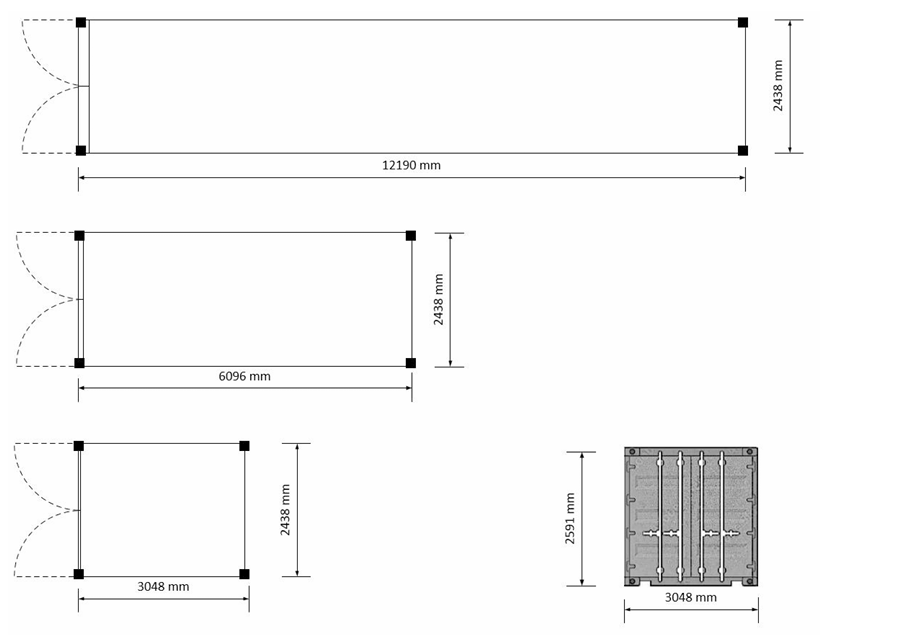
Containerised OWTS modules - Community-Scale Water Systems

| Parameter | OWTS™ M | OWTS™ L | OWTS™ XL |
|---|---|---|---|
| Water Production | 200 L/h | 500 L/h | 1,500 L/h |
| Configuration | 10 ft ISO Container | 20 ft ISO Container | 40 ft ISO Container |
| Clean Water Storage | 1,600 L | 3,200 L | 6,400 L |
| Transport Weight | 3,500 kg | 7,000 kg | 16,500 kg |
| Operating Weight | 7,000 kg | 15,000 kg | 30,000 kg |
| Typical Power Consumption | 100 W | 250 W | 750 W |
| Specific Energy Consumption | ~0.5 Wh/L | ~0.5 Wh/L | ~0.5 Wh/L |
| Power Supply | 12V DC / 24V DC / 230V AC | 12V DC / 24V DC / 230V AC | 12V DC / 24V DC / 230V AC |
| Water Source | Lakes, rivers, streams and wells | Lakes, rivers, streams and wells | Lakes, rivers, streams and wells |
Key Features
- No membranes
- No routine chemical dosing
- Low energy consumption
- Compatible with solar power, batteries, generators and grid electricity
- Modular and scalable product family
- Designed for off-grid operation
- Simple maintenance and field serviceability
- Suitable for operation by non-specialists
- Multi-barrier treatment approach
- Available from portable field units to community-scale water treatment systems
Frequently Asked Questions (FAQ)
What water sources can OWTS™ treat?
OWTS™ is designed for freshwater sources such as lakes, rivers, streams, ponds, reservoirs and wells. Performance depends on local water quality, but the system is specifically developed for natural freshwater environments commonly found around the world.
How reliable is the technology?
Very reliable. OWTS™ is built around well-established water treatment best practices and proven treatment principles that have been used successfully for decades. Rather than relying on highly complex processes, the system focuses on robust, low-maintenance technologies designed for dependable long-term operation.
Can OWTS™ treat seawater?
Not today. OWTS™ is currently designed for freshwater applications. A dedicated seawater desalination module is under development and is planned as a future addition to the OWTS™ platform.
Can OWTS™ operate completely off-grid?
Yes. OWTS™ can operate using solar power, batteries, generators, vehicle power systems or conventional grid electricity. This flexibility makes it suitable for remote locations and infrastructure-limited environments.
Does OWTS™ require chemicals during normal operation?
No. OWTS™ is designed to operate without routine chemical dosing during normal operation. This reduces operational complexity and simplifies deployment in remote areas.
Does OWTS™ use membranes?
No. Standard OWTS™ systems are designed without membranes, reducing maintenance requirements and eliminating the need for membrane replacement programs.
How do I obtain spare parts?
Spare parts, consumables and accessories can be ordered through the DABCE Shop. Standard wear parts have been selected to enable straightforward field maintenance and long-term product support.
Are manuals available?
Yes. All customers receive access to digital documentation through DABCE Cloud, including manuals, technical guides and supporting documentation. Each OWTS™ system is also supplied with a printed set of manuals and field guides.
How difficult is the system to operate?
OWTS™ has been designed for operation by non-specialists. Most routine activities involve basic inspection, filter maintenance and standard operational checks. Detailed instructions are provided through the supplied manuals.
How much maintenance is required?
Maintenance requirements are intentionally kept low. Routine inspection, periodic filter replacement and standard cleaning procedures are typically all that is required to maintain normal operation.
Can OWTS™ be relocated?
Yes. All OWTS™ systems are designed with transportability in mind. Portable units are intended for rapid deployment by individuals, while larger systems are supplied in standard ISO container formats for easy transportation worldwide.
Where can I learn more about UV water treatment?
Additional information about UV disinfection, water treatment technologies and drinking water production can be found in the DABCE Knowledge Hub.
Where can I learn more about slow sand filtration?
Detailed articles explaining biological filtration and slow sand filtration technology are available in the DABCE Knowledge Hub.
Where can I learn more about drinking water treatment?
The DABCE Knowledge Hub contains articles, technical guides and educational resources covering drinking water treatment, water quality, filtration technologies and off-grid water supply solutions.
Can OWTS™ be customised?
Yes. OWTS™ is built on a modular platform and can be configured for different capacities, deployment scenarios and water quality requirements. Optional modules and accessories may be available depending on project requirements.
What makes OWTS™ different from other water treatment systems?
OWTS™ is designed around simplicity, robustness and low energy consumption. By combining proven biological filtration with DABCE’s proprietary treatment technologies, the platform delivers reliable drinking water production without relying on membranes, routine chemical dosing or highly complex automation systems.
Who is OWTS™ intended for?
OWTS™ is designed for organisations, businesses and communities that require reliable drinking water production where conventional water infrastructure is unavailable, unreliable or impractical to deploy.
Typical users include:
- Homeowners and rural households
- Farms and agricultural operations
- Remote communities and villages
- Mining and resource projects
- Construction and infrastructure projects
- Research stations and scientific expeditions
- Emergency response organisations
- Humanitarian and aid organisations
- Military and defence operations
- Civil protection agencies
- Temporary workforce accommodation and camps
- Municipalities and local authorities
- Critical infrastructure operators
- Industrial facilities with remote water requirements
Whether deployed as a portable field unit, a benchtop system or a community-scale water treatment plant, OWTS™ provides a practical solution for producing safe drinking water directly from natural freshwater sources.