
Net-pen (cage) farming means fish grow in floating or moored net volumes in the sea, fjord, bay or a freshwater lake. The farmer supplies feed, nets, mooring, monitoring and harvest - but the water is the surroundings: temperature, oxygen, current, ice, algae and pathogens arrive "free" and uncontrolled. This is the model that made Atlantic salmon a global industry, and it remains the backbone of Norwegian, Chilean, Scottish, Faroese and Canadian salmon production.
How a pen works
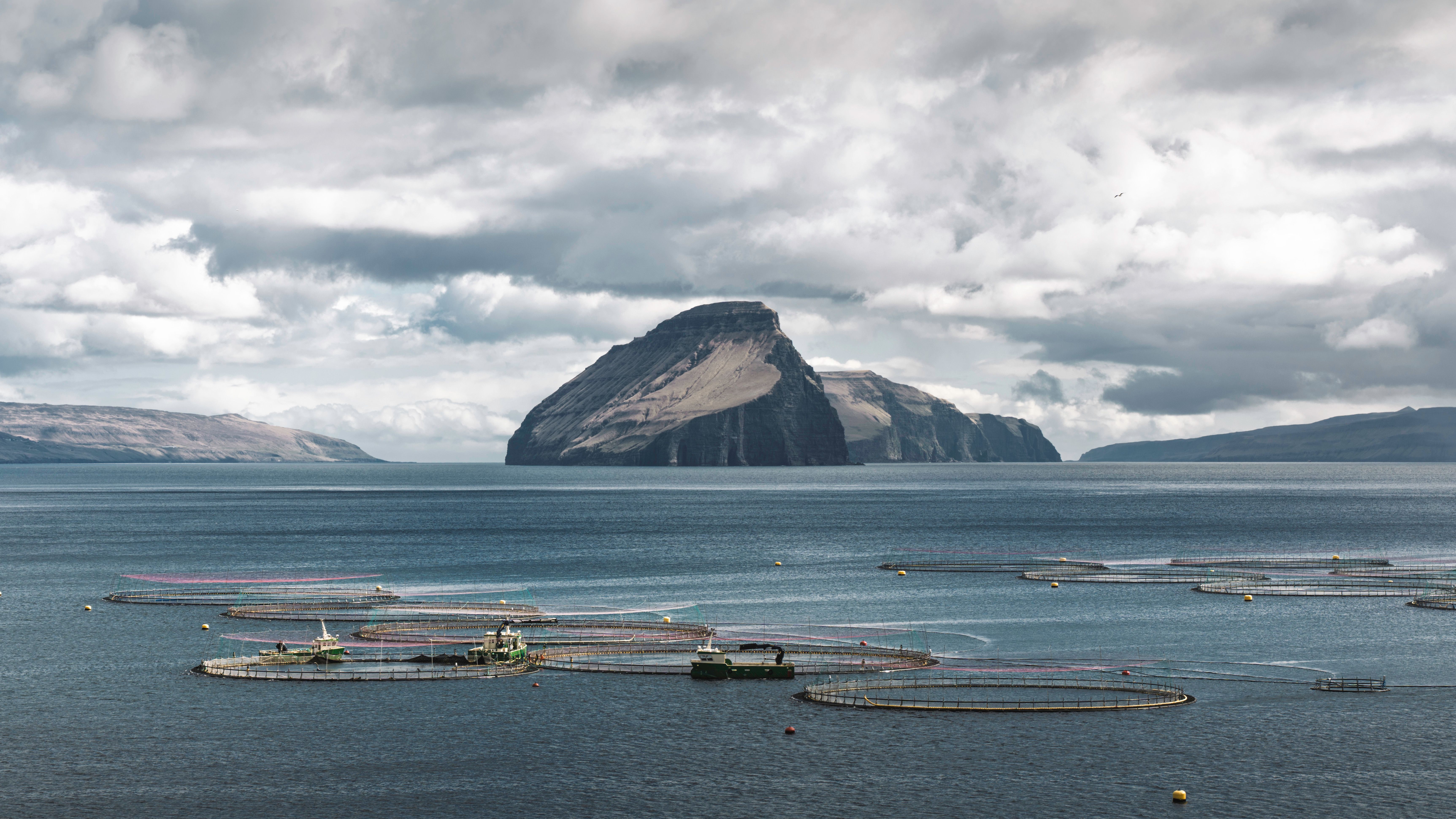
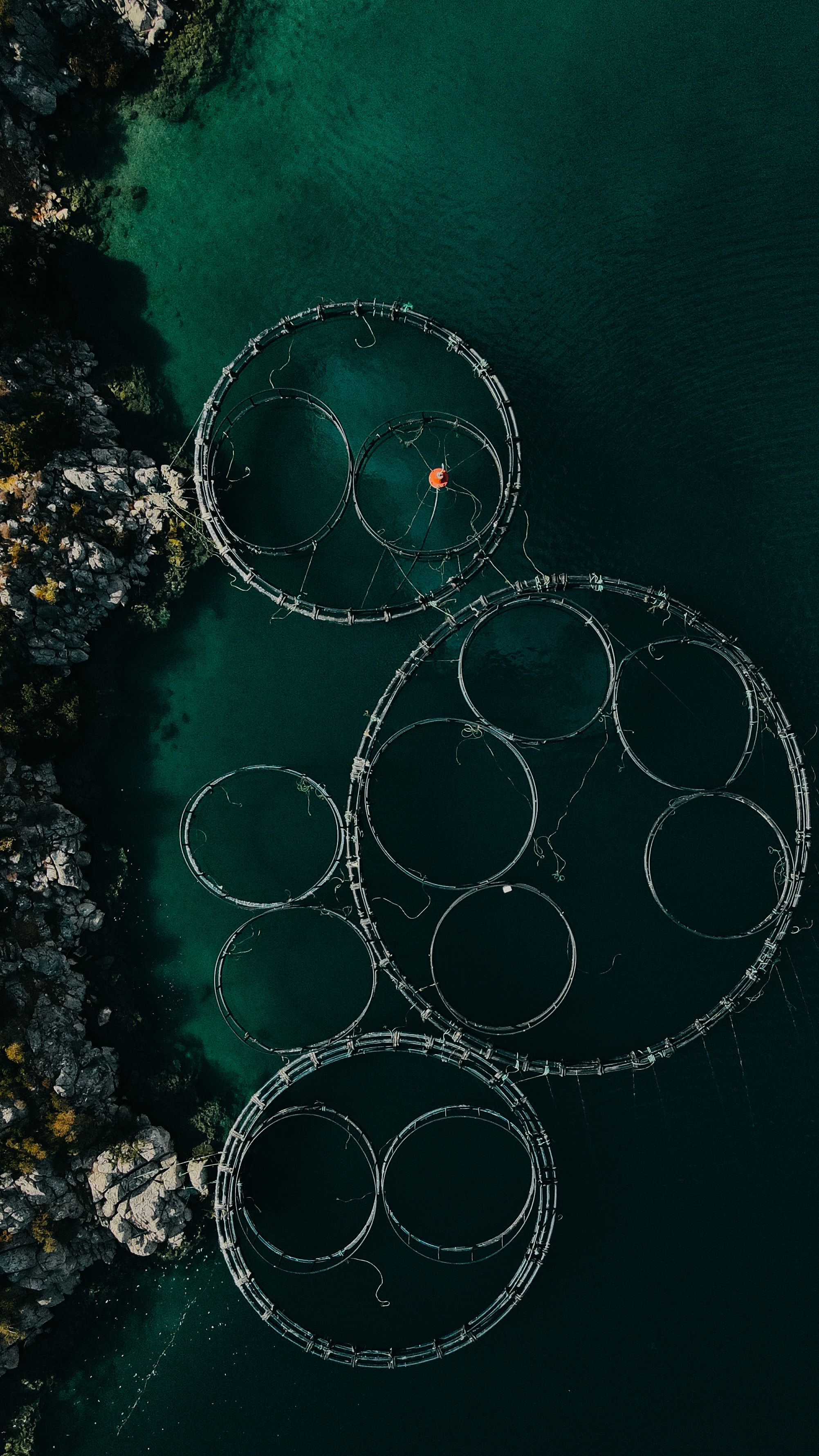
A typical marine pen is a circular float collar (often HDPE) with a hanging net bag, bottom, weights and sometimes bird or predator nets. Several pens sit in a frame or in rows and are moored to the seabed with chain, rope and anchors. Feed comes from a barge or shore station via hoses; cameras and sensors control the ration. Nets are changed and cleaned; biofouling raises drag and cuts through-flow if it is not managed.
- Circular HDPE collars - most common in modern salmon farming; scalable diameter and depth.
- Steel and square pens - older or special sites; more deck area, different load paths.
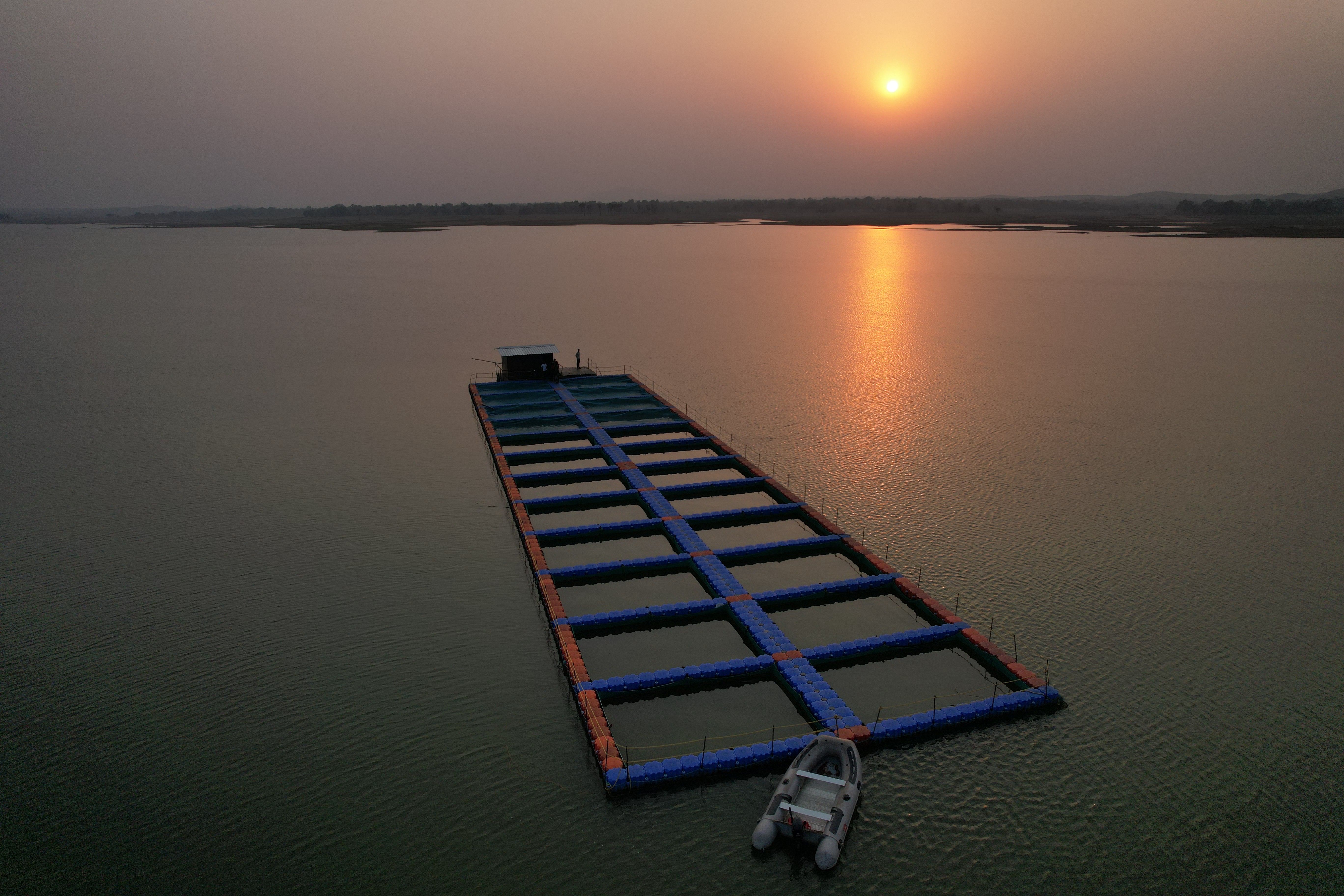
- Freshwater lake pens - often simpler construction; ice, stratification and under-ice oxygen dominate.
- Submersible or more closed units - attempts to avoid lice, algae, ice or storms in the surface layer.
Sea and lake - two different worlds
Marine cage farming (salmon, sea bass, sea bream, some tropical species) uses large water volume, salt and often good exchange. The price is lice (on salmon), storms, escapes toward wild stocks, and local benthic load under the pen. Freshwater cages (rainbow trout, Arctic char, sometimes other inland species in the Nordics and elsewhere) avoid sea lice but meet ice, winter oxygen risk, algal blooms and often tighter local lake rules. An inland pen is not "the same farm as in Norway, just in a lake".
Operations in practice
- Daily feed control against appetite, temperature and oxygen - overfeeding hits both economics and the seabed.
- Net inspection, change-out and washing; holes are escape risk and a predator entry.
- Temperature and DO profiles - especially in summer stratification, algal blooms and ice.
- Lice and health protocols in marine salmon (counts, treatment, coordination between sites).
- Contingency: storm, ice, oxygen crash, predator attack, escape, algal warning.
Environment and permits
Nutrients and solids from feed and faeces enter the water column and the seabed under and around the pen. Modern permits often require environmental monitoring, fallowing, biomass caps and sometimes relocation or technology. Social licence - neighbours, capture fisheries, tourism, wild salmon stocks - is often as decisive as the hardware. The pen is cheap per tonne when it works; it is politically and environmentally sensitive when it does not.
Advantages
- Lower CAPEX per tonne than land-based RAS - an established large-scale model.
- Low energy use for water exchange compared with pumped recirculation.
- Large natural volume gives dilution and temperature buffering.
- Mature supply chain for pens, feed, vessels and service (especially marine salmon).
- Fast scale-up when permits and a site exist.
Limitations
- Lice, pathogens, predators and harmful algal blooms reach the fish directly.
- Escapes and genetic/pathogen interaction with wild stocks.
- Local benthic and nutrient impact; fallowing and site access cap capacity.
- Weather, ice, current and storm - production stops and insurance cost.
- Limited control of temperature and oxygen; inland pens are vulnerable under ice.
- Permits and social acceptance can stop expansion even when the technology works.
Place in the puzzle
The pen is not the opposite of land-based - they are often coupled. Common: hatchery and smolt/post-smolt on land (higher biosecurity), then on-growing in cages. Conversely, land-based food fish can replace cages where lice, ice, permits or market proximity make open water unsuitable. See land vs sea, offshore, hybrid systems and biosecurity. For inland salmonids where cages are not an option, semi-flow / FlowFarm and RAS are the usual alternatives.
Sources/overview (selection): FAO (production and SOFIA), established marine salmon practice, national lice/discharge rules, and experience from freshwater pens in cold inland waters. Lice limits, biomass and discharge figures are always site- and permit-specific.