
Many people imagine fish farming as cages in the ocean or ponds in the countryside. In reality, some of the world's most advanced fish farms look more like water treatment plants, food factories, or even spacecraft life-support systems.
At its core, a Recirculating Aquaculture System (RAS) is surprisingly easy to understand. Think about a home aquarium. Fish swim in the tank and produce waste. Uneaten feed and feces accumulate. A filter removes particles and beneficial bacteria convert toxic ammonia into less harmful compounds. Air stones add oxygen, and from time to time water is replaced.
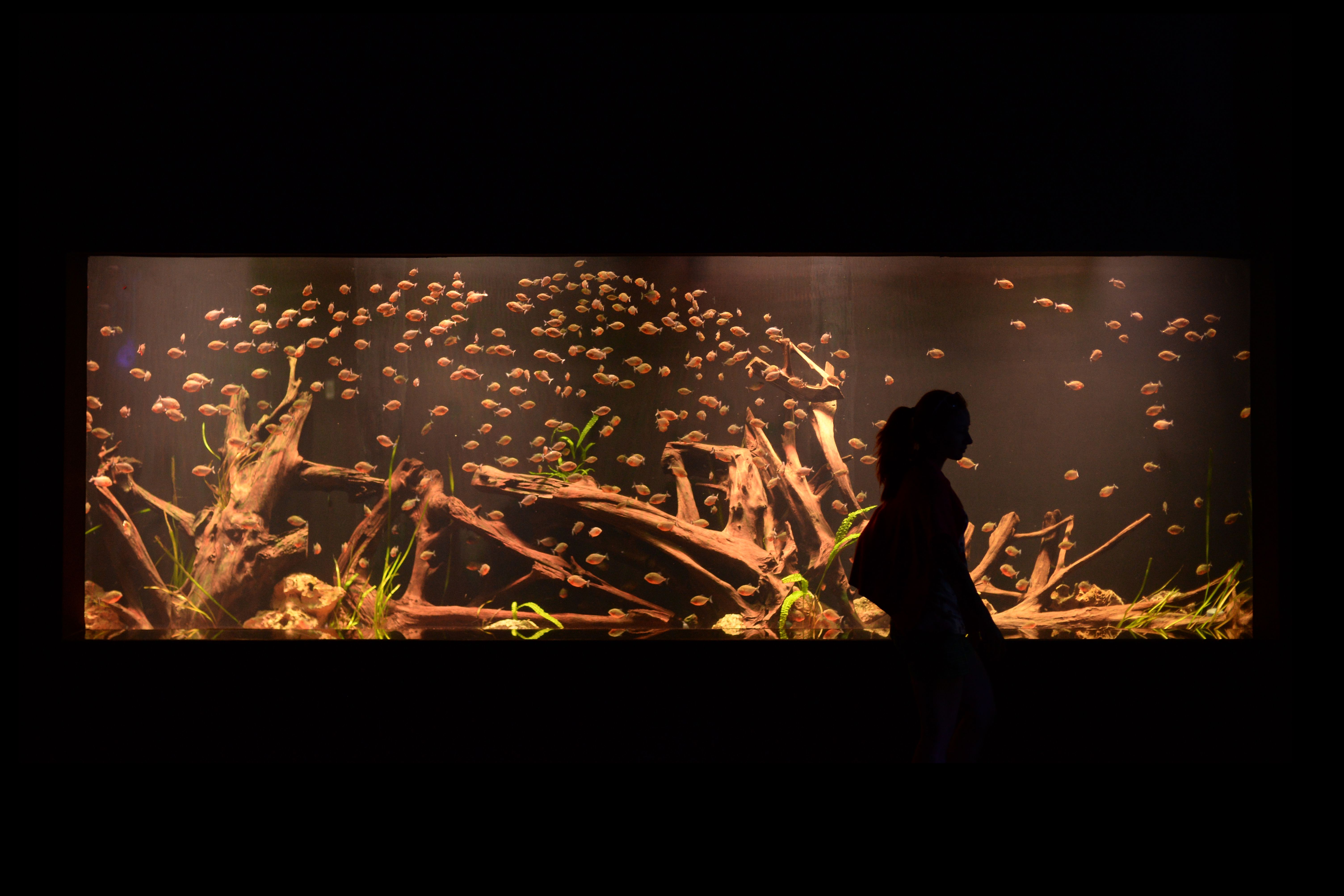
A RAS facility follows exactly the same principles, just on a much larger scale. Instead of a 200-litre aquarium, a commercial farm may contain millions of litres of water and thousands of tonnes of fish. Massive filtration systems, biofilters, oxygen generators and control systems continuously maintain water quality so the same water can be reused over and over again. In a traditional fish farm, water is used once and discharged. In a RAS facility, the water becomes a valuable resource that is treated, recovered and reused.
Why reuse water?
Fish do not consume water. They live in it. The challenge is keeping the water clean enough for the fish to thrive. Every kilogram of feed added to a fish tank eventually becomes: fish growth, carbon dioxide, ammonia, suspended solids and dissolved nutrients. A RAS system continuously removes or transforms these waste products so the water can return to the fish tanks. The result is that modern RAS farms may reuse more than 95% and in some cases more than 99% of their water while maintaining excellent environmental control.
Typical water flow
Fish tanks
↓
Mechanical filtration
(drum filter / disc filter)
↓
Biofilter
(MBBR, fixed bed, biosand filter,
MBR, algae-producing unit / photobioreactor)
↓
CO2 removal
(degasser)
↓
Oxygen addition
(oxygen cone / LHO, aerators,
trickling filters, etc.)
↓
Microbiological control / sterilisation
(UV, ozone, etc.)
↓
Pump
↓
Back to fish tanks
+
Small make-up water stream
&
effluent treatment
Easy RAS
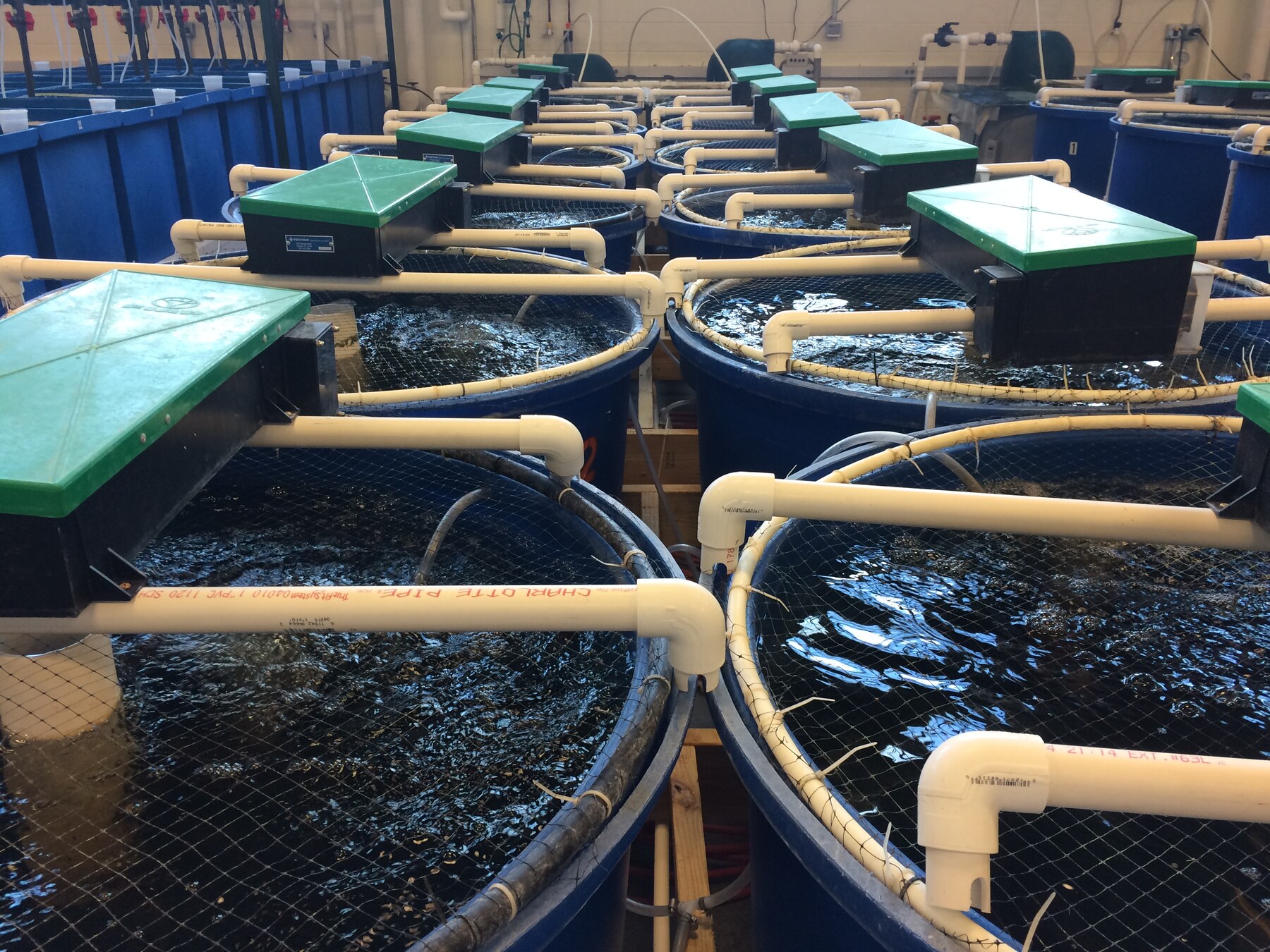
Not all RAS systems are the same. The simplest systems are often used for hatcheries, research facilities or small farms. These systems may exchange 10-30% of the water each day and rely heavily on incoming freshwater.
- Relatively simple operation
- Lower investment cost
- High safety margin
- Easier management
- Higher water consumption
Many small trout hatcheries and fish research stations operate in this way. Think of it as a large aquarium with a generous flow-through component.
Moderate RAS
This is where much of today's commercial RAS industry operates. Water reuse typically ranges from 90-98%. These farms include drum filters, biofilters, degassers, oxygen systems and advanced monitoring.
- Greatly reduced water use
- Improved biosecurity
- Better environmental control
- Commercial production scalability
Most modern land-based salmon, trout, Arctic char, eel and sturgeon facilities fall into this category. For many species and locations, this balance provides the best combination of economics, performance and operational reliability.
Advanced RAS
As water reuse increases, engineering becomes more demanding. At reuse levels above roughly 99%, almost everything that accumulates in water becomes important: carbon dioxide, fine particles, nitrogen compounds, dissolved organics, salts, microbial populations and trace elements. At this stage, the system behaves less like a fish farm and more like an industrial ecosystem.
Additional technologies may include ozone treatment, foam fractionation, membrane filtration, advanced oxidation, nutrient recovery, CO2 management systems and automated water chemistry control. These facilities can produce very large amounts of fish while using surprisingly little freshwater.
Towards closed-loop aquaculture
The future may push RAS even further. Instead of viewing waste as a problem, future systems may treat every output as a resource - for example feed for algae, crustaceans and omnivorous fish, while nutrients return into the system. Seaweed and kelp may become part of the cycle. Such systems begin to resemble natural ecosystems where nutrients flow through multiple organisms rather than being discarded. See also circular food ecosystems under future of aquaculture.
Fish
⬇
Nutrients & organic matter
⬇
Algae production
⬇
Shrimp, prawns & crustaceans
⬇
Omnivorous fish (carp, tilapia)
⬇
Carnivorous fish (salmon, trout)
⬇
Nutrients recovered back into the system
Why biosecurity matters
A major advantage of land-based RAS is biosecurity. In sea cages, fish are exposed to parasites, disease organisms, harmful algae, storms, predators and escapes. In a RAS facility, water conditions can be tightly controlled and external biological threats greatly reduced. This level of control is one reason why land-based production continues to grow globally.
Energy in RAS
The trade-off for all this control is energy. Energy is typically used for: pumping water, oxygen generation, heating or cooling, ventilation, UV systems, ozone generation, monitoring and automation. In cold climates, heating can dominate energy use. In warm climates, cooling may be equally important. As facilities become larger, even small improvements in pumping efficiency, oxygen transfer efficiency or hydraulic design can save substantial operating costs. Maximising air-side oxygen uptake in degassers and choosing the right total ΔDO cuts both flow and power - see our DABCE FlowFarm model for concept sizing.
Thinking bigger
A home aquarium might recycle a few hundred litres of water. A commercial RAS facility may recycle millions of litres every day. The underlying principle, however, is the same: keep the fish comfortable, keep the water clean, and continuously recycle valuable resources. That simple idea has evolved from the household aquarium into one of the most important technologies for future sustainable seafood production.
Advantages and limitations at a glance
- Advantages: site flexibility, high biosecurity, stable temperature, low freshwater use, controlled discharges.
- Limitations: high CAPEX and electricity, need for skill and redundancy, sludge and salts must be managed.